 Hardwareby BoujeeEnjinia1701 · GitHub · open hardware
Hardware · build
WaterWatch, a solar sensor for tap chlorine
An open-hardware, solar-powered sentinel design that flushes a water sample hourly and logs free chlorine, turbidity and temperature at a village tap, then sends alerts by SMS or LoRa. Still at proof-of-concept stage.
Build sheet
- Area
- Water security
- Power
- Solar
- Sensors
- Chlorine, turbidity, temp
- Alerts
- GSM or LoRa
Can I build this?Advanced · AI 3/5 · $300–500
- Difficulty
- Advanced
- AI-buildability
- 3/5
- Time
- A few months
- Cost
- $300–500
Firmware and data logging are software work, but the graphite chlorine cell, optical turbidity path, flush plumbing and solar supply need hands-on hardware skill.
Parts
Tools
soldering iron3D printermultimeterDPD test kitbasic plumbing fittings
Starter prompt
Based on "WaterWatch, a solar sensor for tap chlorine" on Afterware: https://afterware.xyz/p/waterwatch-a-solar-sensor-for-tap-chlorine
Write microcontroller firmware for an ESP32 that wakes hourly, opens a solenoid valve to flush a small sample through a flow cell, reads an analog free chlorine sensor and an infrared turbidity sensor plus a temperature probe, and logs each reading with a timestamp. If a chlorine value falls below 0.2 mg/L or turbidity exceeds a set threshold, send an SMS alert through a cellular modem. Keep the sensing and alert thresholds in a single config file.
Estimates based on the original write-up. Building with an AI assistant? Connect it to Afterware (free MCP server).
Story
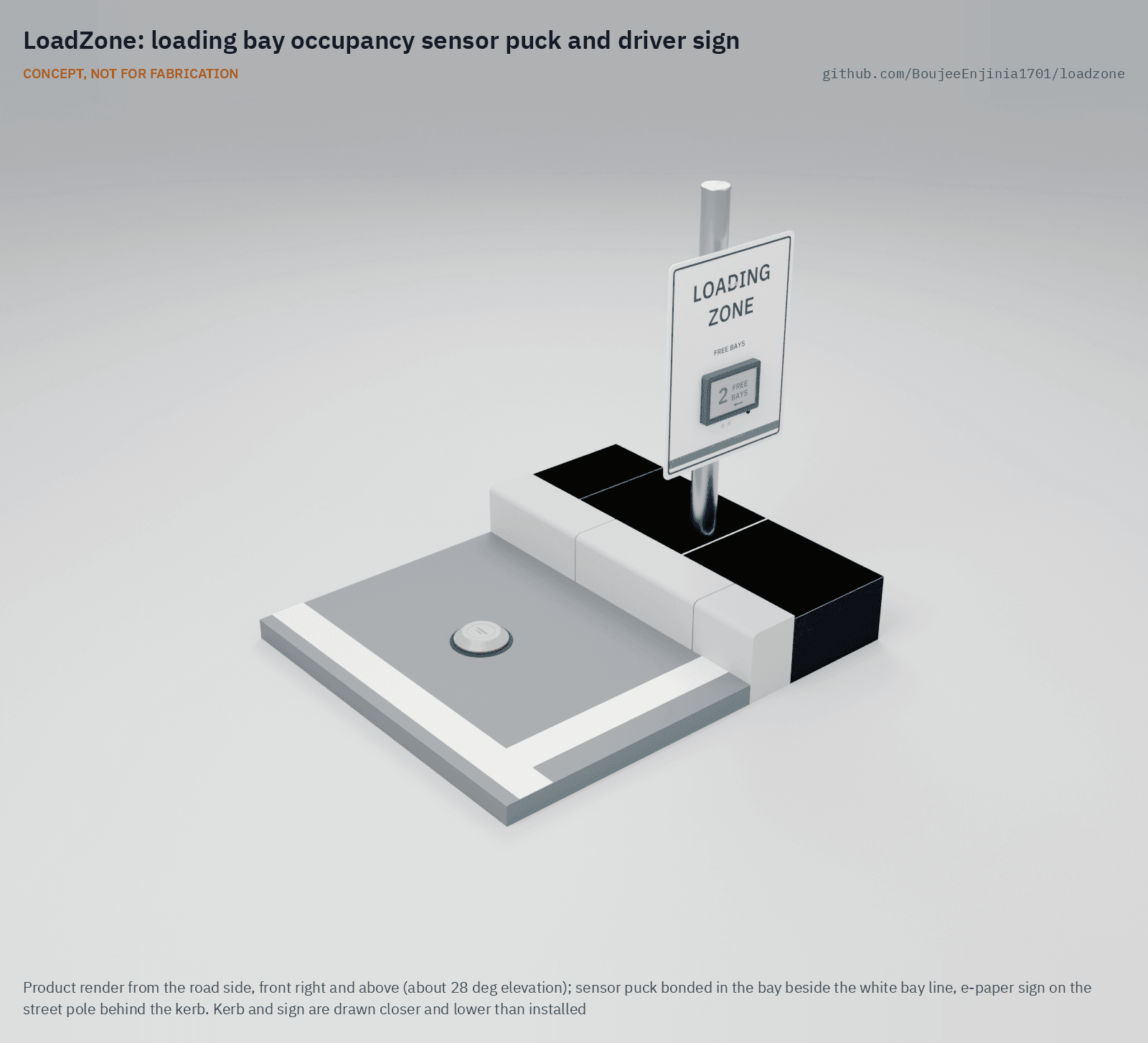
WaterWatch is a pole-mounted sentinel meant to sit beside a village tapstand or storage tank. Once an hour it flushes a small sample through a dark flow-through cell, measures free chlorine residual, turbidity and temperature, logs the readings, and sends them over cellular or LoRaWAN. The design is built around indicators and alerts rather than dosing or declaring water safe.
The author frames the design around people who maintain rural schemes, not utility instrument technicians. Parts are described as off-the-shelf or simple stock, calibration is a monthly DPD comparator check, and the hardware is licensed under CERN-OHL-S so a local workshop can build and repair it. The project is documented as a proof of concept on paper, with a value-engineering target of USD 300.
The motivation is the 2000 E. coli outbreak in Walkerton, Ontario, where missed chlorine measurements contributed to seven deaths. The repository includes renders, an interactive 3D model, sizing calculations, and a build plan.
Resources · 1
More like this


More like this
Hardwareby BoujeeEnjinia1701 · GitHub · open hardware Videoby Victor Barahona · GitHub · cyberdeck